Ayutthaya was torched to the grounds in 1767. But even today, its ruins continue to amaze visitors. Its history serves as a reminder that the enemy strikes successfully where the cracks have set in.

Ayutthaya, the former capital of Siam, was torched to the ground by the Burmese in 1767. But even in its ruins, the island city continues to impress. July was an incredibly hot month for holidaying in Southeast Asia. However, we persisted with our Thai agenda.
In search of a name
Located some 80 km away from Bangkok, the city was high on our must-visit list for two reasons:
- As mentioned before, I’m finding a name for the Constant Companion – the ghostly character of my horror series. His name must be either in Sanskritised Thai or Javanese. I want something that refers back to the dynasties that wielded power over Siam, Java and Kambuja (also known as Khmer Empire). I was pleased when our tour guide mentioned that the temples were built in the style of the Khmer. “Why Khmer?” I asked. “It’s like what the classical Greeks were to the Romans,” he replied. “The Ayutthayan builders looked to the Khmer for their architectural inspiration.” So my gut feeling about the identity of the demon was correct. But I still need a name.
- Our family history. My cousin had compiled an extensive family genealogy from the maternal side of my mother’s family. It’s a long line that can be traced to the great and the ‘good’ (the latter an optional quality, apparently) mentioned in the Kedah Annals. It’s nice to know that Merong Mahawangsa was a progenitor. But it’s even nicer to know that we have Siamese ancestry via DNA test. Even before part of our Perakian state was ceded to the British in the 1900s by Siam, we had kinsmen whose seat was in Songkhla, now in Southern Thailand. So we went to Ayutthaya to learn more about our northern roots.

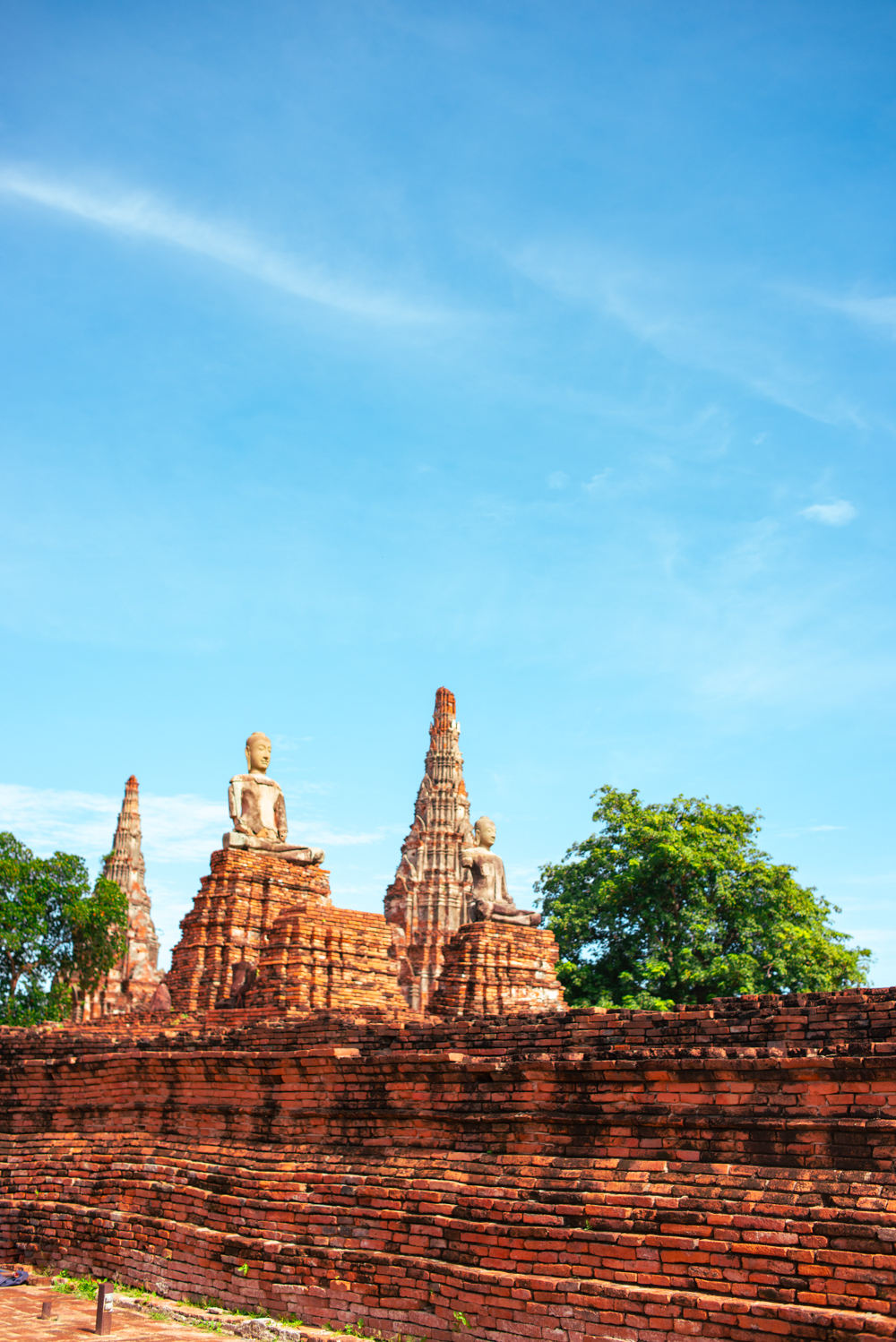

It was an early morning trip. We waited for our tour guide at a Bangkok hotel at 5.45 am. He collected us at 6 am. The entourage set off from central Bangkok at 7.30 pm. By 9 am, we spotted the looming stupas of Ayutthaya in the horizon. I was absolutely ecstatic.
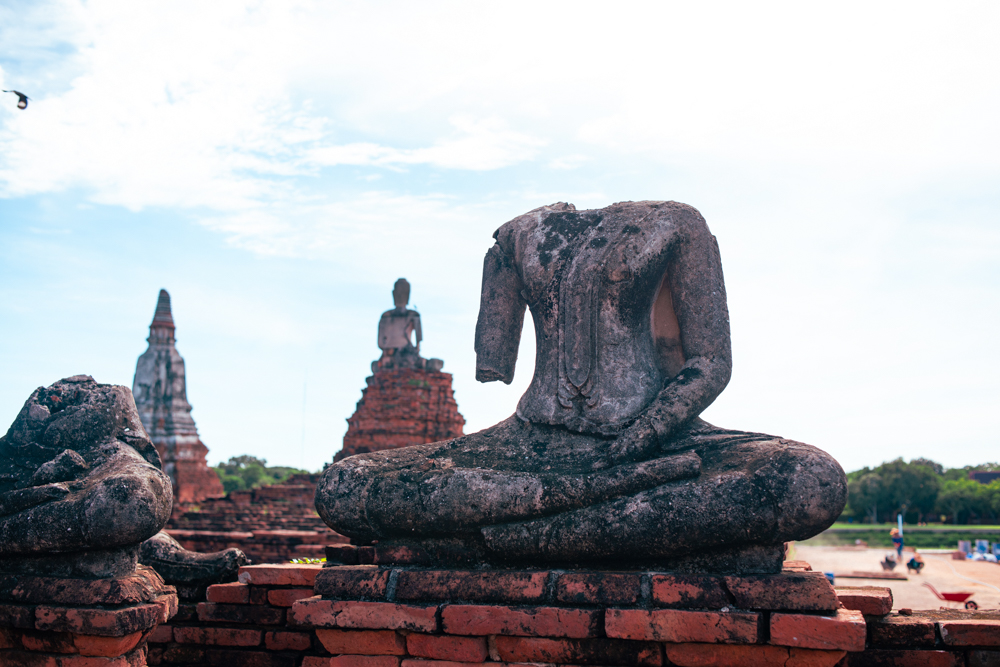
Even in the ruins and darkened stones, you could make out the splendour that the city was famed for in the past. Looking at the temples and the former grand palace, it’s easy to imagine that at its pinnacle, Ayutthaya glowed with gilded roofs, stately stupas and exquisite stonework.
Even in the ruins and darkened stones, you could make out the splendour that the city was famed for in the past.
Spectacles and succession disputes
Like Rome, the destruction didn’t happen in one day. With the Burmese, it took seven years. With Ayutthaya’s own royal brothers and cousins, even longer. Like all great kingdoms, Ayutthaya was largely undone by internal rivalries. There were usurpers. Sukhothai – one of the royal houses – was finished off via three successive regicides, the last two being those of two teenage brothers of not even 18. The Burmese struck where the cracks had already set in.
What intrigues me about Ayutthaya is the significance it played in Southeast Asia centuries ago. Court intrigues aside, the kingdom lasted 33 kings and nine dynasties between 1351 and 1767.


Our tourist guide helpfully explained the wars that led to the ruins of Ayutthaya. “The Burmese and the Siamese were Buddhists but they fought each other regardless,” he said ruefully of the Burmese-Siamese wars that went on for three centuries. “When animals fight, they fight to eat. When humans fight, they do so to win”.
Like all great kingdoms, Ayutthaya was largely undone by internal rivalries. There were usurpers. Sukhothai – one of the royal houses – was finished off via three successive regicides. The Burmese struck where the cracks had already set in.
It’s not the first time we were told of Buddhist kingdoms that didn’t follow the dharma. But considering the Western incursions the region faced in the three-century period, surely someone must have pointed out what a total waste the wars were. I believed quite a few people protested, possibly to their detriment. There were also stories of sacrifices – human sacrifices – told by our guide. Not related to Ayutthaya, thankfully. But interesting enough to fire up my imagination for Part Four. But no, I still didn’t get a name by that point.
The whole belief system was pretty syncretic in the past. Buddhist but also something else. It’s Austronesia after all. A few years ago, we got invited to a Balinese trance ceremony. We were deeply honoured, being Malaysian Javanese and all. But we found the self-stabbing ritual daunting. Even for all my anthropology education and reading of Geertz, I was spooked. I also felt bad for feeling that because, well, that’s my culture. Thinking of that, and having listened to the guide, I accepted that this was how we were.

I appreciate that all we got to see of Ayutthaya is her ruins. But because of that, and because of the stories we heard about the court intrigues and the wars, the city has this aura of mystery.
A tale of my people
I had been taught in history lessons how our ancestors had hunted for human heads for dowries, speared slaves to death to send a ‘telegram’ to the dearly departed in the afterlife, placed the dying in giant funereal jars when they weren’t even dead, and – when they finally learned the concept of statehood – tossed widows alive to funeral pyres.
I’m so glad we’ve moved on.
I appreciate that all we got to see of Ayutthaya is her ruins. But because of that, and because of the stories we heard about the court intrigues and the wars, the city has this aura of mystery. As for the tales of human sacrifice, I’m not going to delve into the Maussian theory to discover meaning behind all that. My interest is pop in flavour. I’d rather immortalise this aspect of our history in a horror fiction instead.
More on The Constant Companion Tales
- A Request For Betrayal (Paperback: Part Four & Five, Amazon UK, £9.99; Amazon SG, from $20; Waterstones, £9.99; Barnes & Noble, $9.99, and at major bookstores globally)
- The Keeper of My Kin (Paperback: Part One, Two & Three, Amazon UK, £9.99; Amazon SG, from $24; Waterstones, £9.99; Barnes & Noble, $9.99, and at major bookstores globally)
- The series: The Constant Companion Tales (E-book, Amazon Kindle)
- Part One: The Red-Haired Gurkhas (E-book, Amazon Kindle, £2.99)
- Part Two: The Tiger-Man and His Constant Companion (E-book, Amazon Kindle, £2.99)
- Part Three: The Night of the Flying Blades (E-book, Amazon Kindle, £2.99)
- Part Four: The Brotherhood of the Tiger-Men (E-book, Amazon Kindle, £2.99)
- Part Five: A Truce Made In Blood (E-book, Amazon Kindle, £2.99)
- Part Six: The Devil from the Deep (E-book, Amazon Kindle, £2.99)
- Part Seven: Scissors in the Fold (E-book, Amazon Kindle, £2.99)

 Salina Christmas