
After a bad Covid infection, I decided that my story can’t wait. I find that mindfulness is needed when writing fiction. And that I’m constantly on beginner’s mind.
I enjoy listening to authors talk about their books. Marketing obligations and search algorithm demands necessitate them to come out of their shells to speak, or share bits of their precious lives with us on these social media apps. But I know they reflect a lot in private. They find a quiet moment to sit down and piece together their plots and verses.
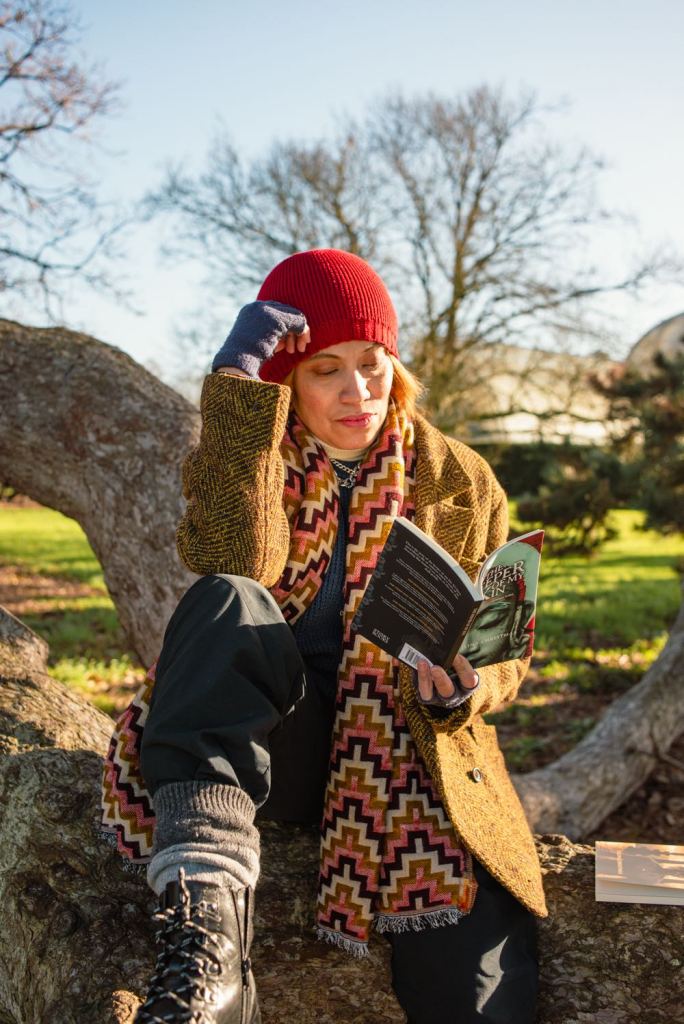
A book is a meditation. Like composing the ikebana, mindfulness is present in the entire supply chain of book-making: ideation, writing, layout, printing, distribution, and presentation. Every stage, from discussing your universe with the development editor, to arranging the typesetting with your printer, is a learning experience. You also learn a lot about the law and rights management from your distributor. And this is what I love about making books. You’re always on beginner’s mind: open, eager and non-judgemental.
In January 2024, I gave a book talk at Level39 Canary Wharf, London, UK about my horror stories, and I emphasised on mindfulness. Weeks later, in February 2024, I gave a talk at Malaysia’s Ministry of Civil Service Library at Putrajaya and I emphasised again on mindfulness in book-making.
Technology helps to speed up a few processes within the book supply chain. But it also raises questions on ethics. Who decides, you the author or the AI machine? Is AI-generated content really free for all, or lifted from other sources? Crucially, will it speed up processes that need to be slowed down in order to write a story?
Will technology speed up processes that need to be slowed down in order to write a story?
In 2011, together with my anthropology postgrad friends and book publishers, we organised a London Design Festival talk, “Whatever’s to become of books?”. Print books were being replaced with e-books and apps, and jobs disappeared as a result. To our relief, years later, book-making still retains its meditative quality, and we get to learn a new raft of skills and concepts from book technology.
Anthropologist Dr Richard Irvine introduced us to the concept of lectio divina. Benedictine monks, whilst eating silently, listen to readings or sermons. To read and to listen is a form of meditation. So, sometimes when my editor and I have dinner, we’d read books to each other.
During the writing of my first and second books, I’d plot the story quietly whilst travelling on the London Underground. Between 2019 and 2023, I was working at BSI Group in Chiswick, UK. I’d go for a solitary walk or sit quietly in the pantry during lunchtime to think up a few lines. My former BSI colleagues would have seen me do this – but they had no idea it was going to be a historical horror fantasy story.


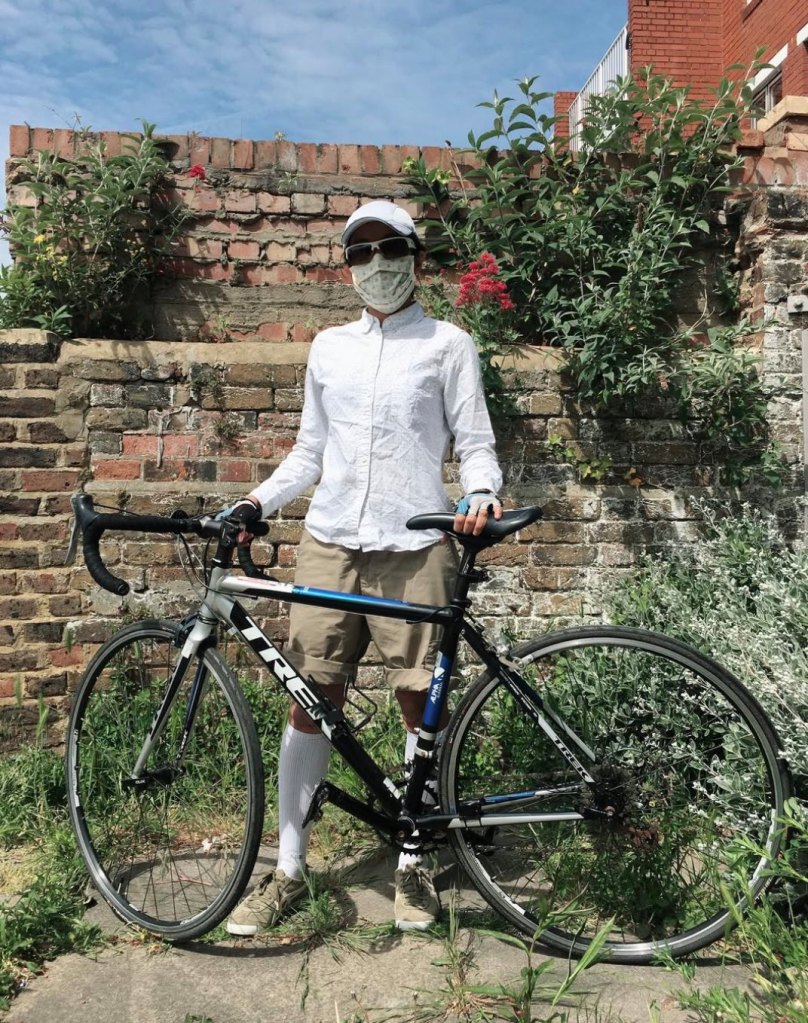
But in honesty, the seeds began many years before, whilst I was working in the City of London, and when I was training for triathlon and rowing. I meditated whilst running along the River Thames from work to home in Fulham. I cycled alone or in a group to Richmond Park and dreamt up my scenarios when coasting down a quiet lane, or whilst waiting for the East West Rail coaches to whizz through whilst I sat on my bike at the traffic light. A World War 2 scenario actually came to my head as I was running through some leafy forest for a cross-country competition in East London.
About a decade later, I pieced them all together and wrote them down into two books. I had a bad Covid infection in 2022. I decided that my books must be written. I never really thought if they’re good or bad, or are to anyone’s taste. I just felt the time was right to have my story heard.
I had a bad Covid infection in 2022. I decided that my books must be written.

I understand if an author of fiction takes a long time to write a follow-up to their first book. Or if they abandon a book halfway and return to it six months later. Or if they refuse to release their series into a book until they feel ready. Or if they log off immediately after eight hours of office work to disappear. Or if they disappear from social media – or social life – for some time to be alone. It’s about self care. It’s about being mindful of one’s time and boundaries, much needed when building the universes.
So I know that when a fiction author proudly announces in person or on social media, “I have a book”, I know he or she has spent a long time bringing the book to shape – and spent even much longer time being on their own thinking, deliberating, and meditating on the story.
I know that when a fiction author proudly announces in person or on social media, “I have a book”, I know he or she has spent a long time bringing the book to shape.
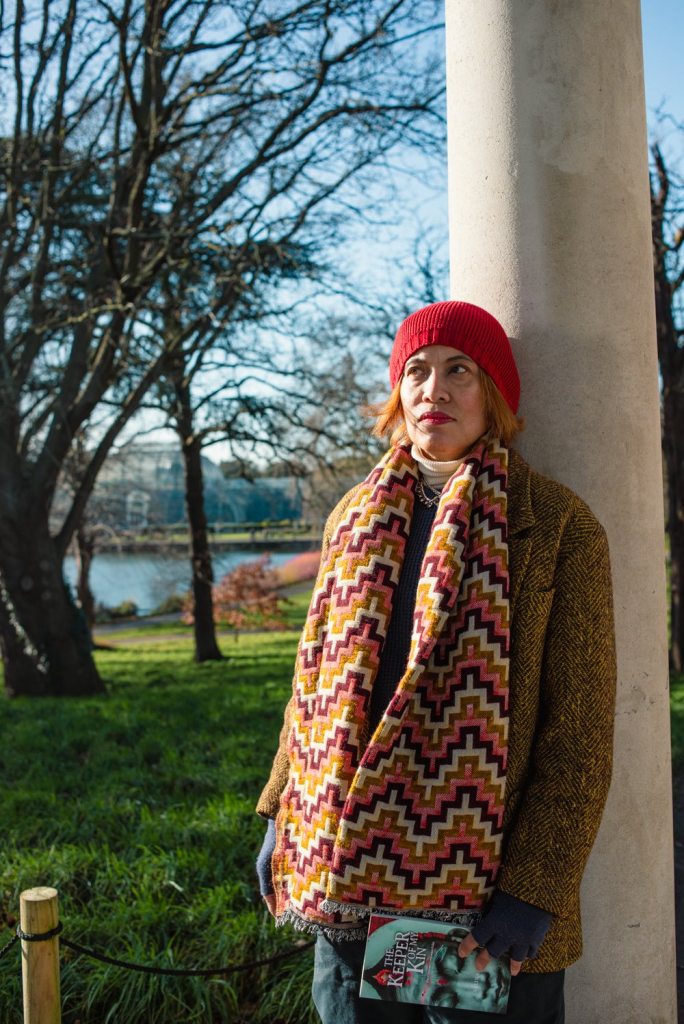
It’s about being mindful of one’s time and boundaries, much needed when building the universes.
More on The Constant Companion Tales
- A Request For Betrayal (Paperback: Part Four & Five, Amazon UK, £9.99; Amazon SG, from $20; Waterstones, £9.99; Barnes & Noble, $9.99, and at major bookstores globally)
- The Keeper of My Kin (Paperback: Part One, Two & Three, Amazon UK, £9.99; Amazon SG, from $24; Waterstones, £9.99; Barnes & Noble, $9.99, and at major bookstores globally)
- The series: The Constant Companion Tales (E-book, Amazon Kindle)
- Part One: The Red-Haired Gurkhas (E-book, Amazon Kindle, £2.99)
- Part Two: The Tiger-Man and His Constant Companion (E-book, Amazon Kindle, £2.99)
- Part Three: The Night of the Flying Blades (E-book, Amazon Kindle, £2.99)
- Part Four: The Brotherhood of the Tiger-Men (E-book, Amazon Kindle, £2.99)
- Part Five: A Truce Made In Blood (E-book, Amazon Kindle, £2.99)
- Part Six: The Devil from the Deep (E-book, Amazon Kindle, £2.99)
- Part Seven: Scissors in the Fold (E-book, Amazon Kindle, £2.99)
 Salina Christmas