
Old textbooks of my late brother’s were discovered because of a mishap. It dawns on me that a chain of events that happened to me in the past were signposts that helped me navigate my course.
A shelf overloaded with old books fell off our wall recently. The shelf is new, the make IKEA, but the books – some over two decades’ old – put a lot of strain on the wall brackets. It was the universe telling us to let go of our attachments.
Two days later, whilst I was sifting through some old books to be relegated to the store room, I found two books that belonged to my late brother. He was an English teacher. He passed away in 2005, months after the Asian Tsunami that turned our region upside down.
One of the books was a textbook published by Sasbadi (2002) that he used for teaching English Literature to high school students at Ampang, Ulu Kelang, Selangor. To my surprise, the book, Examination Practice for PMR English: Form 1, 2, 3. Literature Component, was edited by Malachi Edwin Vethamani.
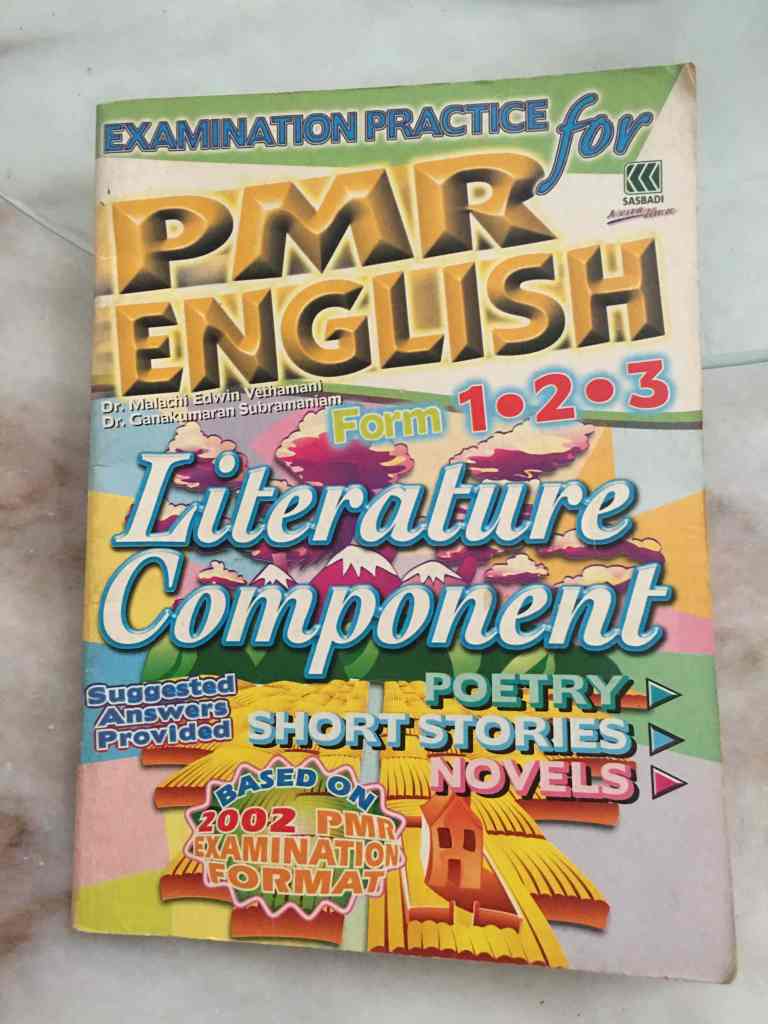
Synchronicity, I thought. The poet Jack Malik invited me to cover the November 2024 book launch of Malaysian Places and Spaces, also edited by Malachi Edwin Vethamani. I didn’t know Prof Vethamani then. I was away for 25 years in the UK. I worked within UK publishing and journalism. I worked in marketing. I know only a handful of Malaysian journalists from my time working at the Sun Daily ages ago. So when I saw my brother’s textbook with Vethamani’s name on it, I thought: Well then. Things happen for a reason.


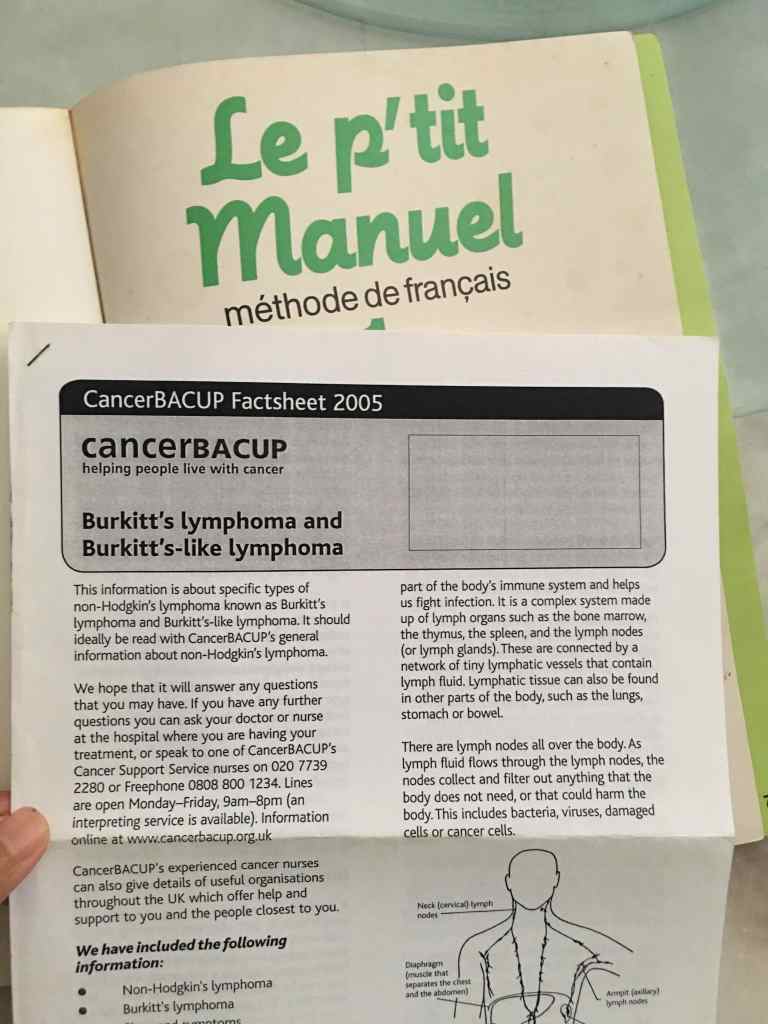
The other book that belonged to my brother was Le p’tit Manuel: Methode de Francais 1, published by Hachette (1983). It was my brother’s French textbook. But get this: within the pages, I found the UK NHS’s CancerBACUP Factsheet 2005 on Burkitt’s Lymphoma. My sister, who lived with me in the UK, brought this back to Malaysia for my brother when he was diagnosed with cancer.
I showed the French textbook and the NHS factsheet to my sister. She smiled faintly and said: “He was still studying French when he was dying. This is what he read when he was dying.”

I believe in karma, in kalpas, in the past or the future that travels through time to address us who live in the present. The signs are there. I have to write my stories. It’s undeniable that my penny dreadfuls are derivative; they can’t even be compared with the writings of Poe or Hill or James. But if I had wavered ever so slightly in my literary pursuit, after discovering these two books, I don’t waver anymore.
An author has a massive influence on their readers. There is an accountability that comes with being an author. You never know who reads your work, or how long your works stay in their possession, or if they end up being artefacts to be cherished by your reader’s next-of-kin.
The other old books will be relegated to the store room, probably to the bin. But not my brother’s textbooks. His books will sit by my side as I write my tales.
An author has a massive influence on their readers. There is an accountability that comes with being an author. You never know who reads your work, or how long your works stay in their possession, or if they end up being artefacts to be cherished by your reader’s next-of-kin.
More on The Constant Companion Tales
- A Request For Betrayal (Paperback: Part Four & Five, Amazon UK, £9.99; Amazon SG, from $20; Waterstones, £9.99; Barnes & Noble, $9.99, and at major bookstores globally)
- The Keeper of My Kin (Paperback: Part One, Two & Three, Amazon UK, £9.99; Amazon SG, from $24; Waterstones, £9.99; Barnes & Noble, $9.99, and at major bookstores globally)
- The series: The Constant Companion Tales (E-book, Amazon Kindle)
- Part One: The Red-Haired Gurkhas (E-book, Amazon Kindle, £2.99)
- Part Two: The Tiger-Man and His Constant Companion (E-book, Amazon Kindle, £2.99)
- Part Three: The Night of the Flying Blades (E-book, Amazon Kindle, £2.99)
- Part Four: The Brotherhood of the Tiger-Men (E-book, Amazon Kindle, £2.99)
- Part Five: A Truce Made In Blood (E-book, Amazon Kindle, £2.99)
- Part Six: The Devil from the Deep (E-book, Amazon Kindle, £2.99)
- Part Seven: Scissors in the Fold (E-book, Amazon Kindle, £2.99)
 Salina Christmas